Biscoff Cheesecake Recipe
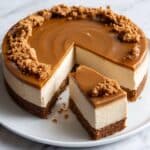
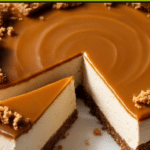
This luscious Biscoff Cheesecake combines a buttery Biscoff cookie crust with a creamy, rich cheesecake filling infused with Biscoff cookie butter. Baked in a water bath for a smooth texture and topped with a melted Biscoff spread glaze and crushed cookies, this dessert is the perfect indulgence for cookie and cheesecake lovers alike.
- Prep Time: 25 minutes
- Cook Time: 70 minutes
- Total Time: 1 hour 35 minutes
- Yield: 12 servings 1x
- Category: Dessert
- Method: Baking
- Cuisine: American
Ingredients
Scale
Crust
- 32 pieces Biscoff cookies (252 g)
- 5 Tablespoons unsalted butter (70 g), melted
- ¼ teaspoon kosher salt
Filling
- 24 oz brick-style cream cheese (3 x 8-oz packages), room temperature
- ¾ cup light brown sugar (150 g), packed
- ½ teaspoon kosher salt
- ¾ cup Biscoff spread (180 g)
- 2 large eggs, room temperature
- ½ Tablespoon vanilla extract
- ½ cup sour cream (120 g), room temperature
- ¼ cup heavy cream (55 g), room temperature
Topping
- ½ cup Biscoff spread (120 g)
- Roughly chopped Biscoff cookies (as needed)
Instructions
- Prepare the crust: Preheat your oven to 350℉. Optionally, line the bottom of a 9-inch springform pan with a cake board or foil to ensure easy removal of the cake later. In a food processor, pulse the Biscoff cookies to your desired consistency—fine, roughly ground, or crushed. Combine the ground cookies with salt and melted butter, mixing until fully incorporated. Transfer this mixture to the bottom of the prepared springform pan and press it evenly using a tamper or flat-bottomed cup to form the crust.
- Bake the crust: Bake the crust in the preheated oven for 8-10 minutes until it’s set. Remove from the oven and let it cool while you prepare the filling. Lower the oven temperature to 325℉.
- Make the filling: In a stand mixer fitted with a paddle attachment, beat the cream cheese on low speed for about 5 minutes until smooth. Scrape down the sides as needed. Add the brown sugar and salt, mixing on medium speed for 3 minutes until well combined. Add ¾ cup Biscoff spread and mix on medium until evenly distributed. With the mixer running on low, add eggs one at a time, ensuring each is fully incorporated before the next. Scrape down the sides again if needed. Add sour cream, heavy cream, and vanilla extract, mixing on low speed until the batter is homogeneous with no visible streaks.
- Prepare for baking in water bath: Wrap the cooled springform pan with two or three layers of heavy-duty foil to prevent water from leaking in. Set aside. Bring 6-8 cups of water to a boil, making sure you have enough to submerge 1½ inches of the springform pan during baking.
- Assemble and bake the cheesecake: Pour the cheesecake batter into the wrapped springform pan, spreading it evenly with a mini offset spatula or the back of a spoon. Place this pan in the center of a large roasting pan. Transfer the roasting pan to the middle rack of the 325℉ oven. Carefully pour boiling water into the roasting pan until the water reaches about 1½ inches up the side of the springform pan. Bake for 60 minutes.
- Cool the cheesecake: After baking, turn off the oven and crack the oven door open slightly to allow gradual cooling for 45-60 minutes. If the oven door won’t stay open by itself, prop it with a wooden spoon. Then, remove the roasting pan and take the springform pan out of the water bath. Let the cheesecake cool completely to room temperature, about 30 minutes, before refrigerating until ready to serve.
- Prepare the topping: Place ½ cup Biscoff spread in a microwave-safe bowl. Microwave in 10-second intervals, stirring between, until the spread is melted and smooth. Pour the melted spread evenly over the chilled cheesecake using a mini offset spatula or the back of a spoon. Garnish the edges with roughly chopped Biscoff cookies. Chill the cheesecake in the fridge for 15 minutes to set the topping before serving.
Notes
- Using room temperature ingredients ensures a smooth, lump-free batter.
- Wrapping the springform pan in foil is crucial to prevent water from leaking in during the water bath bake.
- Slow cooling in the oven helps prevent cracks in the cheesecake.
- Use a springform pan for easy removal of the cheesecake after baking.
- You can adjust the crushed Biscoff cookie texture in the crust to personal preference.
- Keep the cheesecake chilled until serving for the best texture and flavor.
Keywords: Biscoff cheesecake, cookie butter cheesecake, baked cheesecake, Biscoff dessert, creamy cheesecake recipe
Find it online: https://thehungrymason.com/biscoff-cheesecake-recipe/