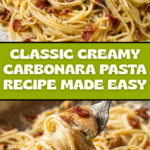
Classic Italian Carbonara with Guanciale and Pecorino Romano Recipe
Introduction
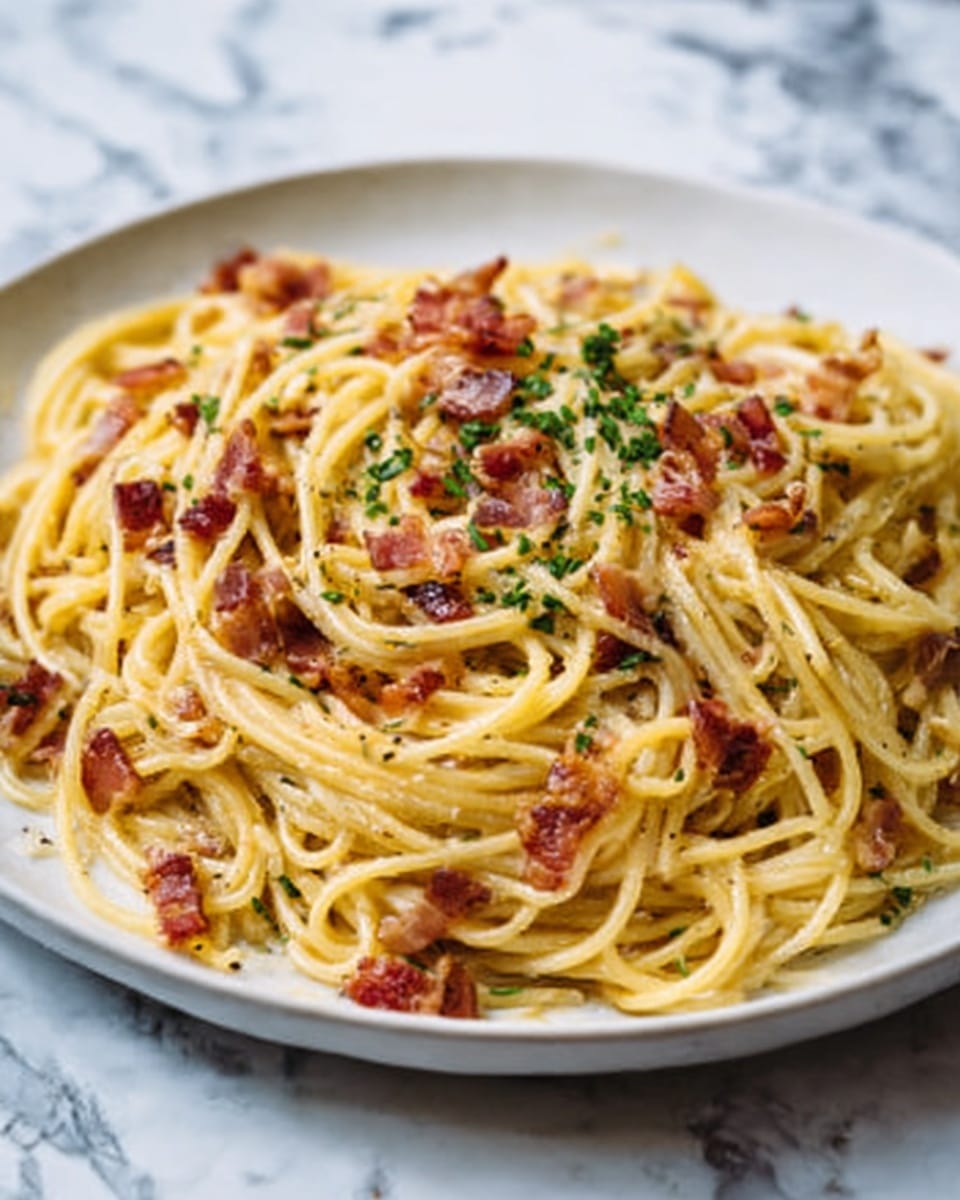
Classic Italian carbonara is a simple yet indulgent pasta dish made with eggs, cheese, guanciale, and black pepper. Creamy and savory, it comes together quickly and makes a perfect comforting meal any night of the week.
Ingredients
- 4 large eggs, at room temperature
- 2 large egg yolks, at room temperature
- 1 (8-ounce) piece guanciale or pancetta, cut into 1/2-inch wide matchsticks (about 1 1/2 cups)
- 1 pound dry spaghetti
- 2 teaspoons kosher salt, plus more as needed
- 1 ounce finely grated Pecorino Romano cheese (2/3 to 1 cup, do not use pre-grated), plus more for serving
- 1 teaspoon coarsely ground black pepper, plus more for serving
Instructions
- Step 1: Bring a large pot of water to a boil over medium-high heat.
- Step 2: Place 8 ounces of matchstick-cut guanciale in a large skillet, preferably nonstick. Cook over medium heat until it starts sizzling, about 2 minutes. Reduce the heat to medium low and cook, stirring occasionally, until the guanciale is browned and crisp, 6 to 10 minutes more.
- Step 3: Meanwhile, add 1 pound dried spaghetti and 2 teaspoons kosher salt to the boiling water. Cook according to package directions until the pasta is just al dente, 8 to 12 minutes.
- Step 4: Place 4 room temperature large eggs and 2 room temperature large egg yolks in a medium bowl and whisk until combined. Add 1 ounce finely grated Pecorino Romano cheese and 1 pinch kosher salt, and whisk until combined.
- Step 5: When the guanciale is ready, transfer it to a plate with a slotted spoon. Add 1 teaspoon coarsely ground black pepper to the skillet, turn off the heat, and stir to combine. Let cool for 1 minute.
- Step 6: While whisking constantly, slowly stream in 1 tablespoon of the fat from the skillet into the egg mixture, then slowly stream in 1/4 cup of the pasta cooking water.
- Step 7: When the spaghetti is ready, turn off the heat, then transfer it directly to the skillet with tongs. It’s okay if some water clings to the pasta. Add 1/4 cup pasta water to the skillet and toss until the pasta is well-coated and most of the water and fat in the pan have been absorbed.
- Step 8: While tossing the pasta constantly, slowly start pouring the egg mixture into the skillet, pouring into the center over the pasta and not around the edges. Add the guanciale and continue tossing until the sauce coats the pasta.
- Step 9: If the sauce is too thin and not coating, turn the heat on to the lowest setting and cook, tossing constantly, until thickened slightly. Make sure to move the skillet around so any hot spots on the burner don’t scramble the eggs.
- Step 10: Taste and season with more kosher salt and black pepper as needed. Transfer to a large or individual serving bowls and serve immediately with more grated Pecorino and a few grinds of pepper on top if desired.
Tips & Variations
- Use guanciale if possible for authentic flavor, but pancetta is a good substitute.
- Make sure eggs are at room temperature to ensure a smooth, creamy sauce.
- Work quickly when combining eggs and pasta to prevent scrambling the eggs.
- For a milder taste, try mixing Pecorino Romano with Parmesan cheese.
Storage
Store leftover carbonara in an airtight container in the refrigerator for up to 2 days. Reheat gently in a skillet over low heat, adding a splash of water or broth to loosen the sauce without scrambling the eggs. For best texture, enjoy carbonara fresh.
How to Serve
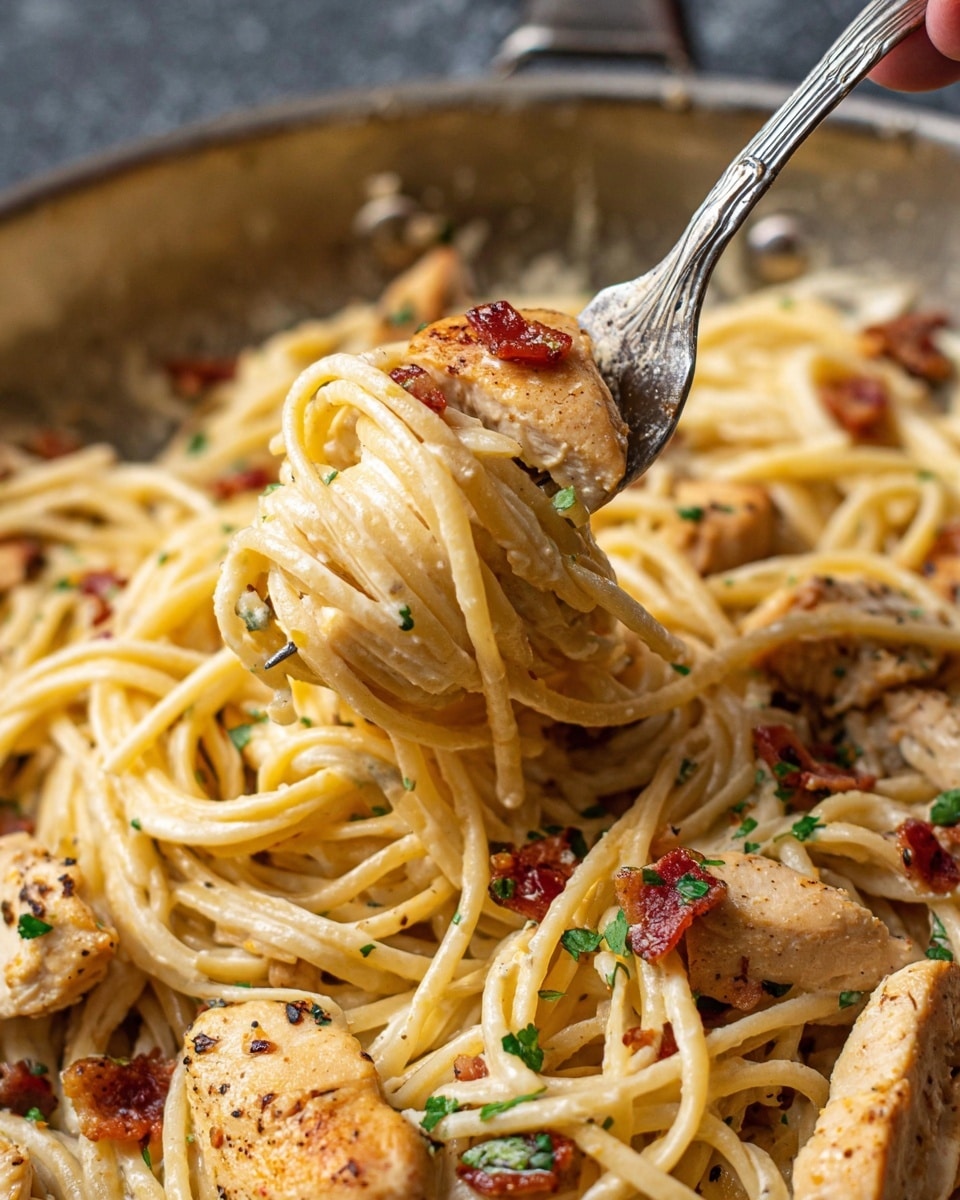
Serve this delicious recipe with your favorite sides.
FAQs
Can I use bacon instead of guanciale?
Yes, bacon can be used as a substitute for guanciale or pancetta, but it will deliver a smokier flavor that slightly changes the traditional taste of carbonara.
Why is my carbonara sauce scrambled?
Scrambled sauce usually happens when the eggs are exposed to too much heat too quickly. To avoid this, remove the pan from heat before adding the egg mixture and stir constantly while combining with the hot pasta.
PrintClassic Italian Carbonara with Guanciale and Pecorino Romano Recipe

Classic Italian Carbonara recipe with creamy egg and Pecorino Romano cheese sauce, crispy guanciale, and perfectly al dente spaghetti. This easy-to-make pasta dish uses simple ingredients yet creates a rich and flavorful meal that’s perfect for any occasion.
- Prep Time: 10 minutes
- Cook Time: 20 minutes
- Total Time: 30 minutes
- Yield: 4 servings 1x
- Category: Pasta
- Method: Stovetop
- Cuisine: Italian
Ingredients
Pasta
- 1 pound dry spaghetti
- 2 teaspoons kosher salt, plus more as needed
- 1/4 cup pasta cooking water (reserved during cooking)
Sauce
- 4 large eggs, at room temperature
- 2 large egg yolks, at room temperature
- 1 ounce finely grated Pecorino Romano cheese (about 2/3 to 1 cup, do not use pre-grated), plus more for serving
- 1 pinch kosher salt
- 1 teaspoon coarsely ground black pepper, plus more for serving
Guanciale
- 1 (8-ounce) piece guanciale or pancetta, cut into 1/2-inch wide matchsticks (about 1 1/2 cups)
Instructions
- Boil the pasta water: Bring a large pot of water to a boil over medium-high heat. Add 2 teaspoons kosher salt before adding pasta.
- Cook the guanciale: Place 8 ounces of matchstick-cut guanciale in a large nonstick skillet. Cook over medium heat until it starts to sizzle, about 2 minutes. Reduce heat to medium-low and cook, stirring occasionally, until browned and crisp, about 6 to 10 more minutes. Transfer guanciale to a plate using a slotted spoon and keep the rendered fat in the pan.
- Cook the pasta: Add 1 pound dried spaghetti to the boiling water. Cook according to package directions until just al dente, about 8 to 12 minutes. Reserve 1/4 cup of the pasta cooking water before draining.
- Prepare the egg mixture: In a medium bowl, whisk together 4 large eggs, 2 large egg yolks, 1 ounce finely grated Pecorino Romano cheese, and 1 pinch kosher salt until well combined.
- Temper the egg mixture: While whisking constantly, slowly drizzle 1 tablespoon of the hot rendered guanciale fat into the egg mixture, followed by 1/4 cup of reserved pasta cooking water. This tempers the eggs and prevents scrambling.
- Combine pasta and guanciale fat: Turn off the heat under the guanciale skillet. Add 1 teaspoon coarsely ground black pepper to the skillet and stir to combine. Transfer the hot pasta directly into the skillet with tongs. Add 1/4 cup reserved pasta water and toss until the pasta is well coated and most of the water and fat are absorbed.
- Add the egg mixture and guanciale: While constantly tossing the pasta, slowly pour the egg mixture into the center of the skillet, avoiding the edges, to create a creamy sauce. Add the crisp guanciale and continue tossing until the sauce coats the pasta evenly.
- Adjust consistency: If the sauce is too thin and not coating the pasta well, turn the heat on to the lowest setting and cook while tossing constantly until the sauce thickens slightly. Move the skillet around to avoid hot spots to prevent scrambling the eggs.
- Season and serve: Taste and adjust seasoning with more kosher salt and black pepper as needed. Serve immediately in large or individual bowls with extra grated Pecorino Romano cheese and freshly ground black pepper on top.
Notes
- Use guanciale for authentic flavor, but pancetta can be a substitute.
- Do not use pre-grated Pecorino Romano cheese as it won’t melt properly.
- Make sure eggs are at room temperature to ensure a smooth sauce.
- Temper the eggs carefully with fat and pasta water to avoid scrambling.
- Serve immediately as carbonara sauce can thicken and dry if left sitting.
Keywords: Carbonara, Pasta, Italian, Guanciale, Pecorino Romano, Classic Pasta Recipe, Spaghetti Carbonara