
Shiitake Mushroom Miso Broth with Udon and Ginger Squash Recipe
Introduction
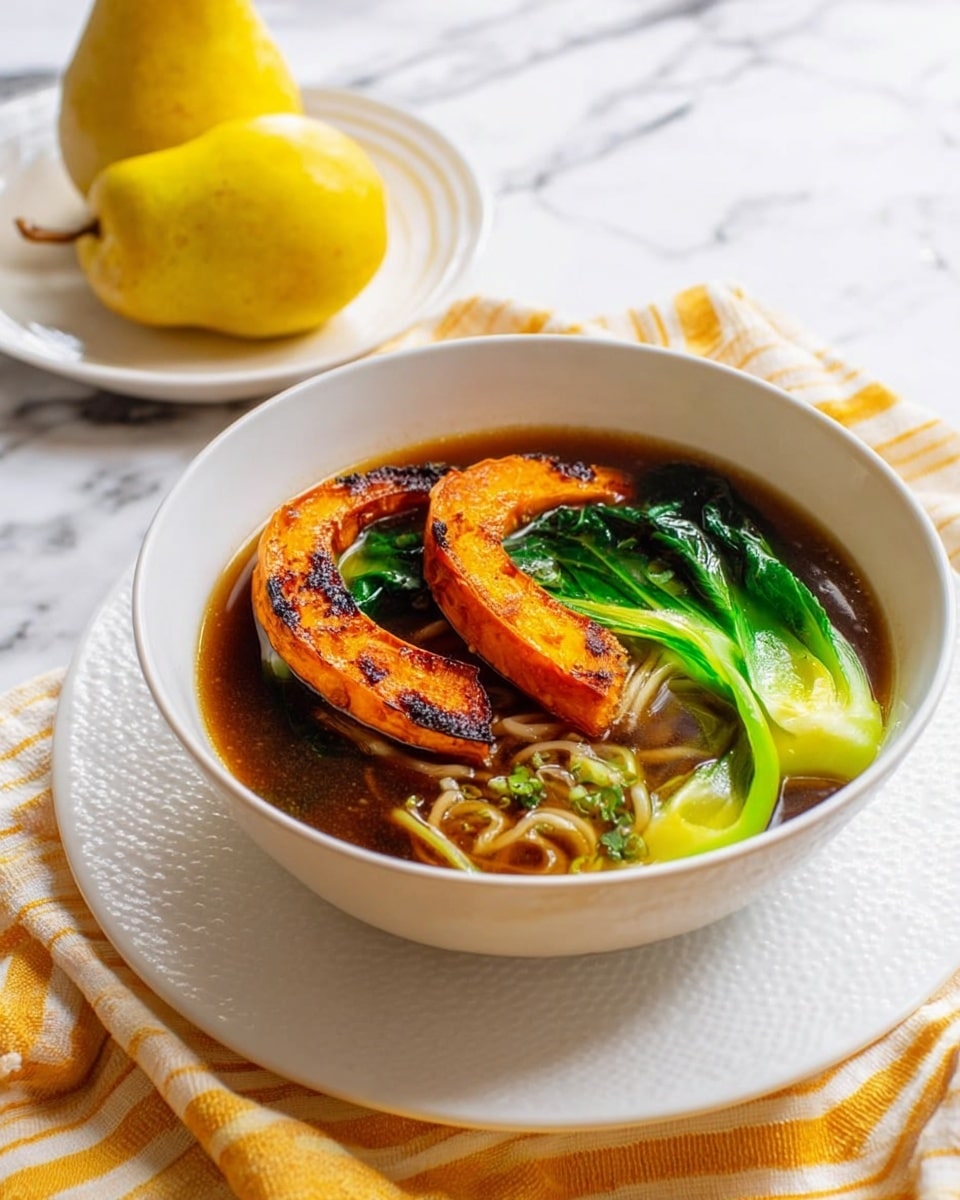
This Shiitake Mushroom Miso Broth with Udon and Ginger Squash is a comforting and flavorful Japanese-inspired soup. It combines earthy mushrooms, sweet roasted kabocha squash, and tender udon noodles in a savory miso broth that’s perfect for chilly days.
Ingredients
- 1/2 ounce (15 grams) kombu seaweed
- 1/2 ounce (15 grams) dried shiitake mushrooms
- 6 cups water
- 1 1/2 pound kabocha squash
- 1 tablespoon vegetable oil
- 3 tablespoons fresh ginger root, minced (portion 1 tablespoon and 2 tablespoons)
- 6 fresh shiitake mushrooms, sliced
- 3 tablespoons tamari
- 3 tablespoons mirin (Japanese cooking wine)
- 8 ounces udon noodles
- 8 heads baby bok choy, sliced lengthwise
- Half an Asian pear, sliced
- 4 scallions, sliced on the diagonal
- 3 tablespoons red miso
- Sesame oil for garnish
Instructions
- Step 1: Make the stock by bringing the water to a boil. Add the kombu seaweed and dried shiitake mushrooms, then reduce the heat and simmer for about one hour. Strain out the kombu and mushrooms, reserving the stock.
- Step 2: Preheat the oven to 375°F (190°C). Cut the kabocha squash in half and scoop out the seeds. Remove the skin using a large chef’s knife or a vegetable peeler.
- Step 3: Slice the squash into pieces about three-quarters of an inch thick. Toss them in a large bowl with vegetable oil and 1 tablespoon of the minced ginger. Arrange the slices on a parchment-lined baking tray.
- Step 4: Roast the squash for about 20 minutes, turning a few times to brown evenly. Remove from the oven and set aside.
- Step 5: Add the remaining 2 tablespoons of minced ginger, fresh shiitake slices, tamari, and mirin to the mushroom stock. Simmer for 10 to 15 minutes.
- Step 6: Add udon noodles, baby bok choy, sliced Asian pear, and scallions to the broth. Simmer for an additional 3 to 4 minutes until the noodles and vegetables are tender.
- Step 7: Remove about half a cup of the hot broth and mix it with the red miso paste until smooth. Turn off the heat and stir the miso mixture back into the pot. Do not boil after adding miso to preserve its flavor and probiotics.
- Step 8: Serve the soup in wide bowls, topping each with the roasted squash slices and a drizzle of sesame oil.
Tips & Variations
- Use a vegetable peeler to easily remove kabocha squash skin if handling a knife is difficult.
- Substitute soba or rice noodles if udon is not available.
- Add tofu cubes for extra protein.
- Adjust the amount of ginger to your taste for a milder or spicier broth.
- For a richer broth, add a splash of toasted sesame oil during cooking.
Storage
Store any leftover broth and vegetables in an airtight container in the refrigerator for up to 3 days. To reheat, warm gently on the stove, adding a splash of water if the soup is too thick. It’s best to add the noodles fresh when serving to avoid them becoming mushy.
How to Serve

Serve this delicious recipe with your favorite sides.
FAQs
Can I use fresh shiitake mushrooms instead of dried?
Yes, fresh shiitake mushrooms can be used but they won’t impart as deep a flavor to the broth. To maintain rich umami taste, it’s best to include dried mushrooms in the stock.
Is it necessary to remove the kombu and shiitake mushrooms after simmering?
Yes, straining out the kombu and dried mushrooms ensures a clear broth and better texture. You can save the rehydrated mushrooms and incorporate them in the soup along with the fresh shiitake.
PrintShiitake Mushroom Miso Broth with Udon and Ginger Squash Recipe

A comforting and flavorful Shiitake Mushroom Miso Broth featuring tender kabocha squash, fresh udon noodles, and aromatic ginger, perfect for a warming and wholesome meal.
- Prep Time: 20 minutes
- Cook Time: 1 hour 40 minutes
- Total Time: 2 hours
- Yield: 4 servings 1x
- Category: Soup
- Method: Roasting and Stovetop
- Cuisine: Japanese
- Diet: Vegetarian
Ingredients
Broth Ingredients
- 1/2 ounce (15 grams) kombu seaweed
- 1/2 ounce (15 grams) dried shiitake mushrooms
- 6 cups water
- 3 tablespoons fresh ginger root, minced (portion: 1 tablespoon for squash, 2 tablespoons for broth)
- 6 fresh shiitake mushrooms, sliced
- 3 tablespoons tamari
- 3 tablespoons mirin (Japanese cooking wine)
- 3 tablespoons red miso
- Sesame oil (for garnish)
Main Ingredients
- 1 1/2 pound kabocha squash
- 1 tablespoon vegetable oil
- 8 ounces udon noodles
- 8 heads baby bok choy, sliced lengthwise
- Half an Asian pear, sliced
- 4 scallions, sliced on the diagonal
Instructions
- Make the stock: Bring 6 cups of water to a boil. Add kombu seaweed and dried shiitake mushrooms, then reduce the heat to a simmer. Let it simmer for about an hour to extract maximum flavor. Once done, strain out the kombu and mushrooms, reserving the flavorful broth.
- Prepare the squash: Preheat your oven to 375°F (190°C). Cut the kabocha squash in half and scoop out the seeds. Carefully remove the skin using a large chef’s knife or a vegetable peeler for ease. Then, slice the squash into three-quarter inch thick pieces.
- Roast the squash: In a large bowl, toss the kabocha slices with vegetable oil and 1 tablespoon of the minced ginger. Arrange the squash evenly on a baking tray lined with parchment paper. Roast for about 20 minutes, turning occasionally to ensure even browning. Once done, remove from the oven and set aside.
- Simmer the broth with aromatics and vegetables: Return the strained broth to the stovetop and add the remaining 2 tablespoons of minced ginger, sliced fresh shiitake mushrooms, tamari, and mirin. Let it simmer gently for 10 to 15 minutes to combine flavors. Next, add the udon noodles, baby bok choy, sliced Asian pear, and scallions. Continue simmering for another 3 to 4 minutes until the noodles and greens are tender.
- Miso mixture: Remove about half a cup of hot broth and mix it thoroughly with the red miso until it forms a smooth paste. Turn off the heat under the broth to avoid boiling, then stir the miso paste back into the pot, preserving its delicate flavor and probiotics.
- Serve: Ladle the hot broth with noodles and vegetables into wide bowls. Top each serving with the roasted kabocha squash slices and a drizzle of fragrant sesame oil for added depth and a nutty finish.
Notes
- Removing the kombu before boiling prevents bitterness in the broth.
- Be careful when handling the kabocha squash as it is quite hard; a sharp knife is recommended.
- Do not boil miso; adding it off heat preserves its flavor and nutrients.
- You can substitute tamari with low-sodium soy sauce if desired.
- For a vegan broth, ensure your miso is made without fish stock.
Keywords: Shiitake mushroom miso broth, kabocha squash soup, udon noodle soup, Japanese vegetarian soup, ginger miso broth